Bowel Cancer Research
With bowel cancer the fourth most common cancer in Australia, more research is essential to improve diagnosis, treatment and management of the disease. While people over 50 are most at risk of bowel cancer, it is on the rise among young Australians.
Bowel cancer (also known as colorectal cancer) affects 15,500 men and women in Australia each year.
The good news is the National Bowel Cancer Screening Program is helping reduce the burden of bowel cancer.
Sadly though, half of all bowel cancer diagnoses will spread to the liver, where it is often unresponsive to current treatments. That is why more research is needed to tackle this deadly disease.
From advancements in early detection, to advancements in genetics and personalised treatments, Australian researchers have made significant contributions to understanding the role of diet, lifestyle, and immunotherapy in preventing and treating bowel cancer, while participating in impactful clinical trials and global collaborations.
We need more bowel cancer research funding to improve the bowel cancer survival rate and save lives.
The Hospital Research Foundation Group is a Leading Bowel Cancer Charity
The Hospital Research Foundation Group has been instrumental in advancing bowel cancer research by funding innovative projects aimed at early detection, treatment, and enhancing patient outcomes. Our contributions include supporting clinical trials to predict the likelihood of cancer spread, developing rapid diagnostic programs, improving treatment approaches, and advancing post-cancer care to ensure better long-term outcomes for patients.
Our Bowel Cancer Support
Fast-tracking the development of a novel probiotic pill to diagnose bowel cancer.

Researcher
Associate Professor Susan Woods hopes the approach can improve participation rates in bowel cancer screening programs and increase the number of bowel cancers that are detected early.
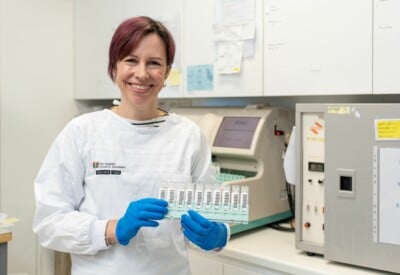
Introducing a novel faecal test to determine which individuals should be prioritised for urgent colonoscopy.
Researcher
Associate Professor Erin Symonds is leading this project, with the aim that the test (different to the at-home faecal tests) can better triage patients at higher risk of bowel cancer.
Despite early detection improving survival rates for bowel cancer, the ongoing side effects from treatment can affect people’s physical, social and psychological health.

Two grants have been awarded that will focus on improving people’s quality of life by managing their ongoing symptoms such as fatigue and nerve pain caused by treatment.
Trialling a new approach to treating aggressive bowel cancer called personalised Total Neoadjuvant Therapy (pTNT) to improve outcomes for high risk patients at the Royal Adelaide Hospital.
Researcher
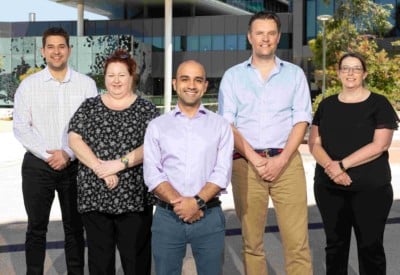
Bowel cancer surgeon Associate Professor Tarik Sammour (middle) and his team are helping patients avoid debilitating surgery with their new approach to bowel cancer treatment.
Investigating a protein called ROCK which has been found to promote the spread of bowel cancer, and then finding ways to inhibit the cancer’s growth.

Researcher
Associate Professor Michael Samuel is learning more about ROCK-induced tumour progression, with the hope that we can slow down and even beat bowel cancer for good.
Investigating the increased prevalence of bowel cancer in adults under 50 and its links to Type 2 diabetes.

Researcher
Associate Professor Joanne Young is investigating the premise that people with Type 2 diabetes are 30-40% more likely than the general population to develop bowel cancer, with those under 50 at higher risk again.
Building a biobank of liver metastatic bowel cancer tissue to analyse and identify biomarkers to help predict whether bowel cancer is likely to spread.

Researcher
Dr Kevin Fenix has established the South Australian Liver Tissue (SALT) biobank to aid this important research.
Increasing awareness in the community of the importance of taking a bowel cancer screening test by funding the Jodi Lee Foundation’s awareness campaign and workplace prevention program.
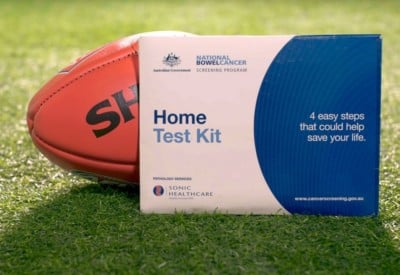
If caught early, bowel cancer has a survival rate of over 90%, which is why free screening is vital.
Developing a Computer Aided Diagnostic (CAD) system to provide a detailed analysis in real time of polyps found during a colonoscopy, to avoid the time delay of sending specimens to the lab.
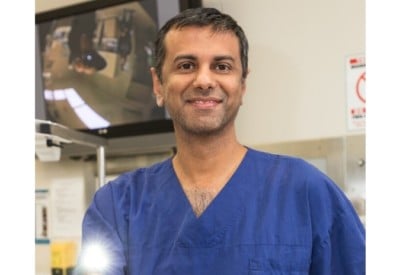
Researcher
Gastroenterologist Professor Raj Singh is building the CAD system using Artificial Intelligence with the aim of achieving more than 95% accuracy, allowing specialists to determine the best intervention immediately.
Every Bowel Cancer Donation Makes a Difference
Your donation to The Hospital Research Foundation Group directly supports life-saving bowel cancer research by funding critical projects to improve early detection and survival rates. From bowel cancer prevention to improving diagnosis and treatment, your donation supports the below initiatives.
From bowel cancer prevention to improving diagnosis and treatment, 100% of your donation delivers meaningful, life-changing impact.
Help make breakthroughs possible: Donate today.
Improving Bowel Cancer Treatment
- Improving Patient Outcomes for Aggressive Bowel Cancer
Personalised Total Neoadjuvant Therapy (pTNT) to improve outcomes for high-risk patients (Associate Professor Tarik Sammour). - Finding a New Treatment for Bowel Cancer
Investigating the ROCK protein to inhibit bowel cancer growth (Associate Professor Michael Samuel).
Improving Bowel Cancer Diagnosis
- Developing a Novel Probiotic Pill to Diagnose Bowel Cancer
Fast-tracking the development of a probiotic pill to enhance early detection (Associate Professor Susan Woods). - Improving the Triage of Patients Requiring Urgent Colonoscopy
Introducing a faecal test to prioritise high-risk individuals for colonoscopy (Associate Professor Erin Symonds). - A Computer Program to Quickly Diagnose Bowel Cancer
Developing a CAD system to provide real-time analysis of polyps during colonoscopy, improving diagnosis speed and accuracy (Professor Raj Singh). - Predicting Whether Bowel Cancer Is Likely to Spread
Building a biobank of metastatic bowel cancer tissue to identify biomarkers that predict cancer spread (Dr Kevin Fenix).
Understanding Bowel Cancer
- Why Are More Younger Adults Getting Bowel Cancer?
Investigating the link between Type 2 diabetes and the increasing prevalence of bowel cancer in adults under 50 (Associate Professor Joanne Young).
Working Towards Bowel Cancer Prevention
- Supporting Bowel Cancer Awareness Through the Jodi Lee Foundation
Raising awareness about the importance of early screening to improve the bowel cancer survival rate.
Create Your Own Bowel Cancer Fundraiser
Join the fight by having a bowel cancer fundraiser to contribute to life-changing bowel cancer research. You can direct your funds to any of our charities or research areas such as bowel cancer research.
-
The Longest Table is our annual cancer fundraiser. Host a dinner party, shared-plate lunch, movie night, online auction or any other fun-filled event to raise funds for lifesaving cancer research (including bowel cancer research). Get together with your friends, family or colleagues to #ForkCancer!
- Creating an online fundraiser is one of the quickest and easier ways to make an impact for the cause of your choice. In just a few minutes, you can set up a fundraising page through Facebook or Just Giving, share your fundraiser via email and on social media and start receiving donations!
Each year, we run in the Adelaide City-Bay Fun Run to raise funds for research, such as bowel cancer research. Together, we run (or walk) to fight against the most common diseases and illnesses affecting our community. Join us for the next fun run knowing your bowel cancer donations are contributing to the fight to save lives.
FAQs
The Hospital Research Foundation Group supports cutting-edge and innovative bowel cancer research in our ongoing fight to improve lives for all Australians.
- Personalised Total Neoadjuvant Therapy (pTNT). A new approach to treating aggressive bowel cancer has shown promising signs of eradicating bowel cancer sooner and avoiding the debilitating complications of surgery for at-risk patients. Called personalised Total Neoadjuvant Therapy, or pTNT, the innovative program is being run through the Royal Adelaide Hospital’s Colorectal Unit and involves personalising the patient’s treatment order based on their risk profile at presentation. The RAH is the only place in Australia implementing an algorithmic approach to TNT. The program is being led by Colorectal Surgeon Associate Professor Tarik Sammour and Head of Unit Dr Michelle Thomas, with funding from The Hospital Research Foundation Group.
- Inhibition of ROCK Protein. Researchers are studying the protein ROCK (Rho-associated protein kinases), which accelerates the spread of bowel cancer, with the aim of finding a way to slow or stop the disease. Leading this life-changing work is Associate Professor Michael Samuel of the Centre for Cancer Biology (an alliance between the University of South Australia and SA Pathology), with backing from The Hospital Research Foundation Group and private donors, The VONBRI Foundation.
- Real-Time Diagnosis During Colonoscopy. Suspicious tissue growths found during a colonoscopy may soon be able to be analysed and diagnosed in real time – avoiding the time delay of sending specimens to the lab and improving patient care. That is the hope for Professor Raj Singh, Director of Gastroenterology at Lyell McEwin Hospital. With a grant from The Hospital Research Foundation Group to kickstart the project, Prof Singh and his team are developing a Computer Aided Diagnostic system to provide a detailed analysis of tissue growths – called polyps – found during colonoscopies. Colonoscopies are a vital step in diagnosing bowel cancer, which is 90 per cent treatable if detected early.
The bowel cancer survival rate depends on the stage of diagnosis, however bowel cancer is 90 per cent treatable when caught early (Source: Australian Institute of Health and Welfare, 2024).
Several factors influence the life expectancy of individuals diagnosed with bowel cancer in Australia. The stage at which bowel cancer is diagnosed is the most significant factor influencing life expectancy. The earlier the cancer is detected, the higher the chances of successful treatment and survival.
By continuing to improve early detection, encourage screening participation, and enhance treatment options, life expectancy for bowel cancer patients in Australia will continue to improve.
Funding bowel cancer research is vital to improving the life expectancy for bowel cancer, and all cancers. Join the fight by organising a bowel cancer fundraiser (learn more about our cancer fundraiser – The Longest Table) or simply make a donation to The Hospital Research Foundation Group and select ‘bowel cancer’ when asked to choose.
The bowel cancer survival rate in Australia has significantly improved due to advances in early detection, screening, and treatment.
The five-year survival rate for bowel cancer is approximately 70 per cent for both men and women, meaning 70 per cent of people diagnosed with bowel cancer will live for at least five years after their diagnosis. (Source: Australian Institute of Health and Welfare, 2024).
Early detection remains key to improving the bowel cancer survival rate and has been made possible thanks to the free bowel cancer screening offered by the Australian Government.
The Hospital Research Foundation Group is funding innovative bowel cancer research projects aimed at improving survival rates.
- Bowel cancer researcher Dr Kevin Fenix from the Basil Hetzel Institute is investigating a group of immune cells that could help predict whether a patient’s bowel cancer is likely to spread. Armed with funding from The Hospital Research Foundation Group, he explains the overall aim of his research is to find new ways to help bowel cancer patients.
- Associate Professor Susan Woods has received funding to fast-track the development of a novel probiotic pill to diagnose bowel cancer. If successful, the approach aims to move away from the current faecal based testing, to hopefully improve participation rates in bowel cancer screening programs and increase the number of bowel cancers that are detected early.
Yes, bowel cancer is curable, especially when caught early. According to bowel cancer researcher, Dr Kevin Fenix, early detection provides a survival rate of over 90 per cent.
The prognosis depends on the type and stage of bowel cancer, as well as the patient’s overall health. The Australian Institute of Health and Welfare (2024) reports:
- Stage 1 Bowel Cancer: Often curable with surgery, with a 5-year survival rate of about 90%.
- Stage 2 and 3 Bowel Cancers: Surgery and chemotherapy significantly improve survival rates, though these are lower than Stage 1.
- Stage 4 Bowel Cancer: Harder to cure, but advancements in chemotherapy, targeted therapies, and immunotherapy are improving long-term survival and remission chances.
Early detection programs and advancements in treatment are giving more Australians the chance to live longer, healthier lives after diagnosis.
You can support bowel cancer research and help improve detection, treatment, and survival rates by:
- Making a Donation: Every bowel cancer research donation to The Hospital Research Foundation Group directly funds life-saving projects.
- Donate here and select “bowel cancer” as your chosen cause.
- Hosting a Fundraiser: Organise a bowel cancer fundraiser through initiatives like The Longest Table, our annual event to raise funds for cancer research.
- Raising Awareness: Encourage friends and family to participate in free bowel cancer screening programs and spread the word about early detection.
Your support helps drive innovation and provides hope to Australians affected by bowel cancer.