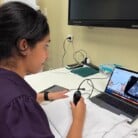
More than 80% of bowel cancer survivors are living with chemotherapy-induced peripheral neuropathy (CIPN), a form of chronic nerve damage which can cause symptoms that range from mild pins and needles to losing all feeling and control in your hands and feet.
CIPN occurs when chemotherapy treatments harm healthy peripheral nerve cells, which carry messages between the brain, spinal cord and rest of the body. When the cells are damaged, it becomes harder for the messages to get through.
No effective treatments are currently available, but a team of researchers from the University of Adelaide is exploring a new approach – funded by The Hospital Research Foundation Group – and seeking trial participants.
“The persistent pain of CIPN severely impacts the quality of life of people and makes it one of the most challenging long-term side effects of cancer treatment,” says lead expert Professor Joanne Bowen (pictured top), Head of the Cancer Treatment and Toxicities Group at the University of Adelaide.
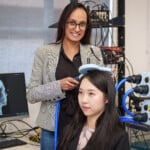 “Our TMaC study explores the potential of repetitive Transcranial Magnetic Stimulation (TMS), a non-invasive technique that uses magnetic fields to stimulate specific brain regions, as a promising treatment option.”
Participants wanted
Trial participants must be over the age of 18, experience ongoing pain in their hands or feet following oxaliplatin-containing chemotherapy for bowel cancer and completed their treatment at least six months ago.
“Early evidence of TMS being used for other cancers, particularly multiple myeloma, suggests it could offer significant relief, transforming the way CIPN is managed,” says Professor Bowen.
“Patients will have between four and seven sessions involving pain assessments and TMS therapy to modulate pain through neuroplasticity.
“We’ll assess if there have been any improvements after eight weeks, and if there has been, we will assess them again after six months.
“We are excited to explore how TMS may provide new hope for patients suffering from the long-term effects of chemotherapy.”
For more information regarding the trial, contact Eva Moore at [email protected] or call 8313 5053.