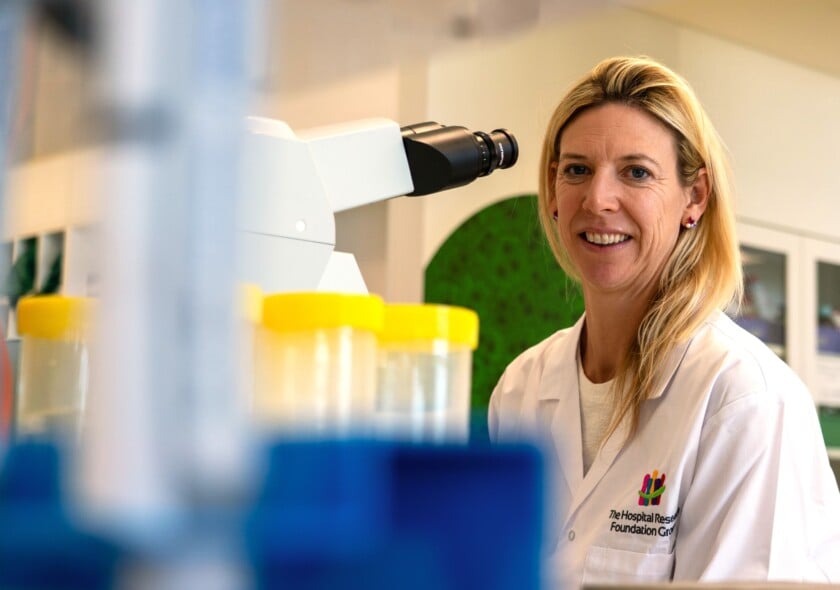
Three new research projects aimed at improving how cancer is detected and treated are set to advance cancer care in South Australia.
The projects will focus on developing a less-invasive diagnostic test for solid cancers, a new approach to diagnosing lung cancer, and an improved treatment for pancreatic cancer.
They are being delivered through a partnership between SAiGENCI (South Australian Immunogenomics Cancer Institute), Adelaide University, Central Adelaide Local Health Network (CALHN), SA Pathology and The Hospital Research Foundation Group.
More than 10,000 South Australians are diagnosed with cancer each year, and around 3,800 lose their lives – highlighting the urgent need for better cancer detection and treatments.
The projects include:

Dr Alexandra Jolley
Developing a genomic liquid biopsy test
Dr Alexandra Jolley and Associate Professor Anna Brown
This project aims to develop a new liquid biopsy test that detects circulating tumour DNA in blood. Testing peripheral blood provides a less invasive and faster alternative to traditional tissue biopsies and can be repeated over time to track the cancer.
The test has the potential to support early cancer detection, guide patient management to enable personalised medicine, and improve monitoring of disease progression and treatment response across a range of solid cancers.
New way to detect lung cancer
Professor Brendan Jenkins and Professor Phan Nguyen

Professor Brendan Jenkins
This project will test a new method to detect lung cancer using DNA collected during a bronchoscopy. This approach is less invasive than traditional biopsies and may help identify mutations in early-stage, hard-to-reach lung tumours.
If successful, it could improve early diagnosis, guide treatment decisions and reduce the need for more invasive procedures.
New treatment for pancreatic cancer
Professor Brendan Jenkins and Professor Nam Nguyen
This project is investigating a new treatment for pancreatic cancer using OncoSil, which delivers targeted radiation directly into the tumour. It will explore whether OncoSil can improve outcomes by boosting the body’s immune response and enhance the effectiveness of existing treatments.
If successful, it could offer a new option for patients with advanced pancreatic cancer, which remains one of the most difficult cancers to treat.