A suite of life-changing research projects have been awarded critical funding by The Hospital Research Foundation Group to improve health outcomes across a range of chronic diseases including melanoma, bladder cancer, mental illness and bowel cancer in Aboriginal Australians.
The nine grants were announced at The Hospital Research Foundation Group’s annual WA Awards night in Perth on 19 November to researchers from Edith Cowan University, The University of Western Australia and Murdoch University.
The Hospital Research Foundation Group’s General Manager in WA, Dana Wallace-Campbell, said the projects were chosen because of their focus on tackling chronic diseases impacting the WA community and their potential to have not only a local impact, but national and global too.
“This year also signifies an exciting expansion from our traditional south metropolitan focus to a statewide remit as we work to address significant funding and service delivery gaps across Western Australia, particularly those in regional and remote WA,” Ms Wallace-Campbell said.
“Our transition from The Spinnaker Health Research Foundation into The Hospital Research Foundation Group earlier this year has really allowed us to broaden our reach and to impact the lives of thousands more Western Australians which is exciting both for us and for all of WA.
“Our commitment to funding the best and brightest Western Australian researchers continues, as does our commitment to meeting the identified needs of the WA community.
“We can only continue to do that of course because of the incredible and ongoing generosity of our community of supporters and donors, who place their trust in us to work towards finding solutions to some of our most challenging health problems.”
Ms Wallace-Campbell said the applications were rigorously assessed by an independent committee and were awarded because of their ability to improve treatment options and health outcomes across a range of chronic diseases in priority areas.
The nine projects are as follows:
EARLY CAREER RESEARCH STREAM:
Dr Trisha Khoo, South Metropolitan Health Service
Breast cancer | Sponsored by SMHS Staff Giving
A new treatment for breast cancer involves an antibody-drug conjugate (ADC) which seeks out and kills cancer cells. ADCs can have big benefits, but don’t work for everybody, and there is currently no way of knowing which patients they will work for.
This study aims to develop a test to predict which breast cancer patients will benefit from ADCs and learn why some fail so they can be adjusted to work for everyone.
Dr Aaron Beasley, Edith Cowan University
Melanoma | Sponsored by Austal Staff and Company
Combination immunotherapy is the current gold-standard melanoma treatment, but only 50% of patients will respond. Therefore, it is crucial to better predict which patients won’t respond, as these patients can then be moved into promising clinical trials that may give more benefit.
This project will validate a liquid biopsy for predicting melanoma response to immunotherapy, enabling patients to be given the most appropriate treatment.
Dr Cynthia Hawks, South Metropolitan Health Service
Bladder cancer | Sponsored by Rotary Club of Fremantle
Patients with invasive bladder cancer who are unresponsive to the standard treatment have limited other options and are often referred for surgical removal of the bladder. Where the surgical option is not suitable, there is an emerging alternative called G-DISCO, an intravesical chemotherapy combination of both gemcitabine and docetaxel.
This study will evaluate the feasibility, safety and tolerability of administering two chemotherapy agents into the bladder as treatment for non-muscle invasive bladder cancer.
Dr Abdul Rahman Ihdayhid, South Metropolitan Health Service
Heart disease | Sponsored by Fremantle Hospital Ladies Auxiliary
Having a heart health check is important for people with a family history of heart attack at a young age. In many young people however, it can be difficult for doctors to estimate their risk of cardiovascular disease.
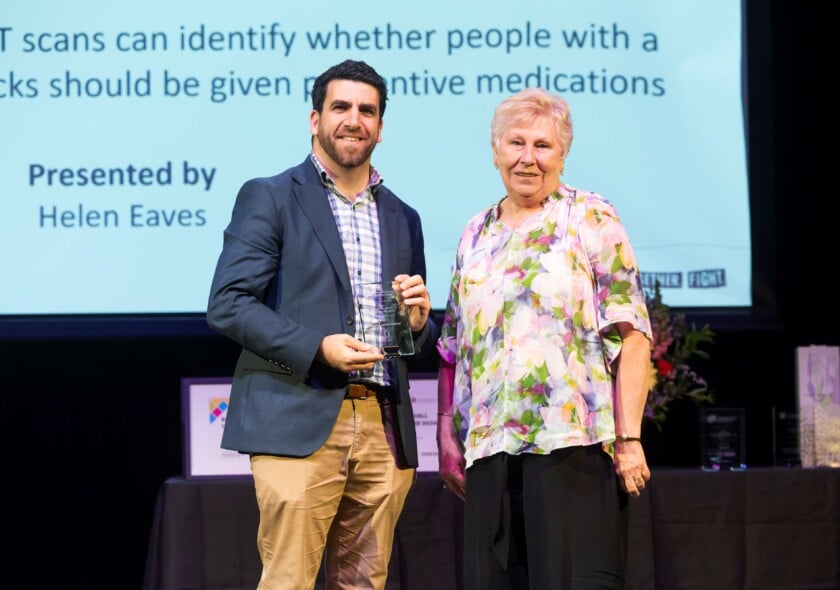
This study will determine if CT scans of the heart can help identify whether family members should be recommended for preventive medications to help prevent future heart attacks.
Dr Michael Kyron, University of Western Australia
Mental health | Sponsored by the City of Cockburn
This project aims to improve the detection and prevention of suicidal ideations among people with mental health concerns, through wearable technology that assesses their sleep, physical activity and mental wellbeing.
Combined with regular check-ins, this approach helps detect early signs of distress and promote positive engagement with mental health supports. The goal is to identify those at risk and provide timely support, improving mental health care in schools and hospitals.
SEED RESEARCH STREAM:
Associate Professor Andrew Redfern, South Metropolitan Health Service
Bowel cancer | Sponsored by the Fewster Family
Research shows that Aboriginal Australians have much higher mortality rates for bowel cancer than non-Aboriginal Australians.
This project seeks to understand if the higher death rate from bowel cancer is due to differences in the type of bowel cancer Aboriginal people get, or not enough of the right treatment. The team will use their learnings across Western Australia to plan better treatments and improve cure rates for Aboriginal people with bowel cancer.
Dr Kim Rice, Murdoch University
Leukaemia | Sponsored by the Stan Perron Charitable Foundation Grant
Acute Myeloid Leukaemia (AML) is the deadliest leukaemia in children. Current therapies fail to eliminate all cancer cells and negatively affect healthy cells, causing relapse and long-term side-effects.
LSD1 is a protein overexpressed in about 50% of AML cases and strongly linked to treatment resistance. This study will guide the development of new LSD1 inhibitors to improve outcomes in childhood AML.
Dr Lydia Warburton, South Metropolitan Health Service
Melanoma | Sponsored by the Janine Chalwell Grant for Melanoma Research
Melanoma is a deadly skin cancer which if not caught early, often spreads to the brain. The early detection of melanoma metastasis to the brain is crucial, because once symptoms appear, treatment success rates drop.
Current imaging methods also have limitations, including discomfort and inaccuracy. This research aims to develop a simple blood test to detect brain metastases early and monitor treatment response, offering a less invasive alternative to current methods.
Prof John Olynyk, South Metropolitan Health Service
Liver disease | Sponsored by Len & Fran Mihaljevich and David Clegg
One in five Australians have risk factors for chronic liver disease, which can lead to deadly liver cirrhosis. Liver cirrhosis is the 11th leading cause of death worldwide, and 4th leading cause of death in males in Western Australia.
To improve treatments for liver cirrhosis, this project will focus on a liver-produced protein called Gamma Prime Fibrinogen (GPF). The team will investigate whether higher GPF-levels correlate with advanced disease, which could establish GPF as a biomarker and target for new personalised therapies, revolutionising cirrhosis management.