Adelaide researchers are in prime position to begin human trials on a game-changing treatment that could prevent thousands of amputations each year.
An exciting new treatment has been developed for diabetes-related foot ulcers – which often leads to amputations – building on past work funded by The Hospital Research Foundation Group.
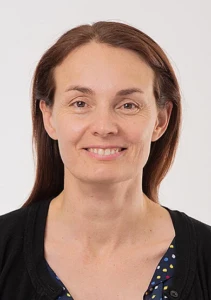
Associate Professor Christina Bursill.
In that study led by Dr Robert Fitridge, a vascular surgeon and Professor of Vascular Surgery at the Basil Hetzel Institute, and Associate Professor Christina Bursill, based at SAHMRI, the pair found that high-density lipoproteins (HDL), or ‘good cholesterol’, did not function properly in patients with diabetes.
But now A/Prof Bursill and her team, including recent PhD graduate Dr Khalia Primer, have been able to reengineer HDL in the lab, reactivating a critical enzyme when it was applied directly to the wound.
A/Prof Bursill said this helped identify just how the dysfunction of this cholesterol impacts wound healing in diabetes.
“Our latest study reveals that HDL works by restoring the levels of an important enzyme called PDK4, which plays a critical role in enabling skin cells to generate the energy required for repair,” A/Prof Bursill said.
“PDK4 is essential for wound healing, but in diabetes, its levels are often too low, making it much harder for the skin to regenerate and close wounds.”

Dr Robert Fitridge and Dr Neil McMillan from the Vascular Sugery Research Group at the Basil Hetzel Institute.
In Australia, it is estimated that about 50,000 people are affected by diabetes-related foot ulcers, with about 5000 amputations performed each year.
About 85% of all amputations in Australia are associated with diabetes-related foot ulcers.
Dr Fitridge said there’s a great need for new research discoveries to correct healing problems.
“Diabetic wounds are highly challenging to treat and often fail to heal properly, leaving patients at risk of serious complications,” he said.
“Even with the best available care, too many wounds remain open for months or even years, increasing the likelihood of infection and amputation.
“We urgently need better treatments that can heal wounds faster and more reliably. If we’re able to intervene earlier and promote more effective healing, we could potentially prevent thousands of amputations each year and significantly improve outcomes for people living with diabetes.”
These findings pave the way for the development of more precise, effective treatments that could help millions of people avoid the devastating effects of non-healing wounds.