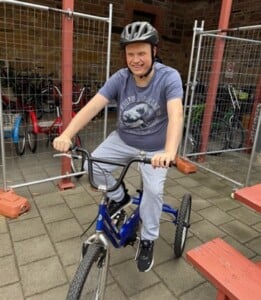
A new, innovative model of care is helping people with intellectual disabilities, like Tim (pictured), receive minor but potentially lifesaving procedures.
Around 30% of people with intellectual or developmental disability are unable to complete minor needle-based procedures, such as a blood test or immunisation.
This can be due to distress, previous trauma or sensory needs that aren’t accommodated in standard medical settings — and creates significant barriers to preventive healthcare and contributes to a staggering 27-year gap in life expectancy.
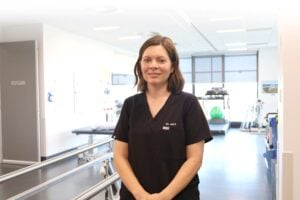 A pilot program, led by Dr Jessica Smith (right) and co-funded by The Hospital Research Foundation Group, is changing the way this care is delivered.
The program assesses each patient’s individual needs and makes personalised adjustments to ensure procedures can be completed safely. These adjustments can range from simple environmental and sensory changes, through to light or even deep sedation with support from an anaesthetist.
For Tim, not being able to get a simple blood test could have cost him his life.
Tim, 32, has profound autism, is non-verbal, and has struggled accessing healthcare since he was a child.
“Since about age five, we weren’t able to get any bloods taken from him and we couldn’t find anybody that would do it,” said Denise, Tim’s mother.
“No doctor would do it because Tim was really scared and he’s actually quite a big boy.
“I can’t control him, I can’t hold him down. There’s no way we could hold him down to get any blood tests done.
When his family noticed that he was becoming pale and wasn’t himself, they knew something was wrong. A blood test was needed.
 Tim’s haemoglobin levels were dangerously low. Any further delay could have been life-threatening.
“It was a godsend. I don’t know that Timothy would’ve still been with us.”
“The care given by those girls was just incredible. They talked to him, they played music for him. Before they even touched him they would sit with him and get to know him. They were looking at every way how they could get some bloods out of him.”
Stories like Tim’s inspired Dr Smith to launch the program through Flinders University and the Southern Adelaide Local Health Network.
“This pilot has evolved from the many patients I have been involved in caring for who have died because of their inability to access basic healthcare. A simple blood test or immunisation can be lifesaving,” Dr Smith said.
“There are limited options available to people with disability.”
“Our adult patients often feel a great sense of achievement in the certificates they obtain from completing different levels of a procedure.”
Thanks to your generous support, Dr Smith and her team are revolutionising healthcare for people with intellectual and developmental disabilities, ensuring that intellectual disability is not an exception to exceptional care.
Funding from The Hospital Research Foundation Group and Flinders Foundation was essential to piloting this new and innovative model of care.
With these results, Dr Smith has now secured a national MRFF (Medical Research Future Fund) grant to progress this life-changing approach for people with intellectual disabilities.