“As a parent, we don’t expect to outlive our children, we all want to be able to see our kids grow up.”
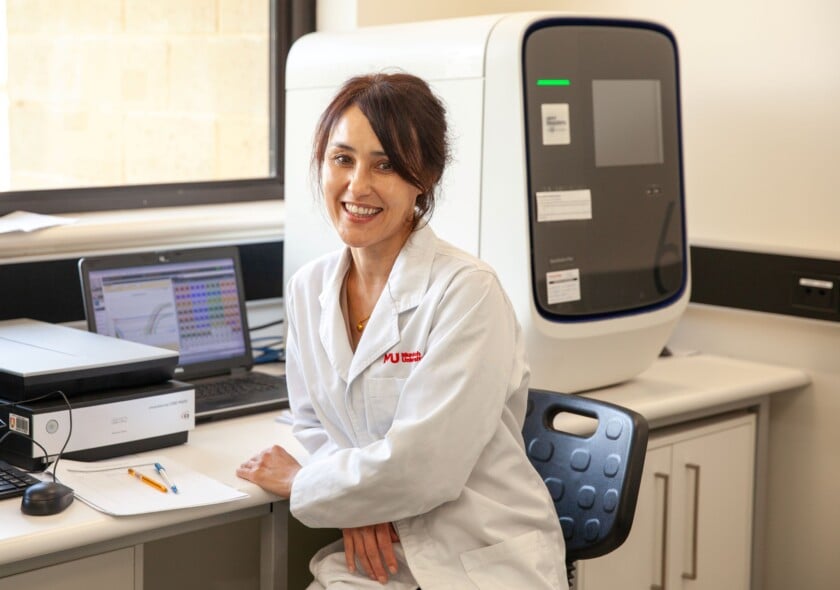
Dr Kim Rice, a lecturer at Murdoch University in medical genetics, is focused on improving the survival rates of Acute Myeloid Leukaemia (AML), the deadliest leukaemia in children.
Dr Rice received a grant from The Hospital Research Foundation Group this year, thanks to sponsor Stan Perron Charitable Foundation, to help develop more targeted therapies for children diagnosed with AML, that aim to not only reduce the often-debilitating side effects of current treatments, but that may ultimately lead to improved survival rates for this cohort of children and their families.
Her research aims to improve outcomes in AML by targeted inhibition of LSD1 – which is a protein overexpressed in approximately 50% of AML cases and which is strongly linked to treatment resistance.
“Sadly, only about a third of children will survive beyond five years post their diagnosis and that’s largely due to the fact that there really haven’t been significant advances in treatments over the decades,” Dr Rice said.
“Children diagnosed with AML are still treated with very toxic, high intensity chemotherapies and stem cell transplants which sadly come with serious side effects as well as an increased risk of secondary cancers, so you can imagine how this impacts the quality of life of those children and their families,” she said.
New effective and safe approaches to precisely target AML cells are urgently needed to improve the survival and quality of life for children with AML.
Dr Rice hopes that her team’s potentially lifesaving research will lead to the creation of more targeted therapies for those diagnosed with AML.
“Pediatric AML treatment is challenging for patients and families, particularly for communities in the South Metropolitan region where I am based, where the financial burden of prolonged care and long-term side-effects is often acutely felt.”
She said more effective and safer AML therapies and strong community partnerships with researchers and clinicians hoped to close this gap, reducing the length and impact of treatment, and leading to a quicker return to a normal life.
Dr Rice said while it was often heart-breaking working with families impacted by leukaemia, it was also what motived her to keep working towards her ultimate end goal.
“These families are what motivates me. They’re really passionate about changing the way we view treatment and constantly searching for new and improved ways that we can treat their children that will help improve their quality of life.
“While they want only the best for their own children, they’re also really passionate about improving and supporting the medical research community to keep striving for better outcomes.”