The Hospital Research Foundation Group’s (THRFG) Parkinson’s Nurse Specialist service has been extended for a further four years, thanks to a renewed commitment from the State Government.
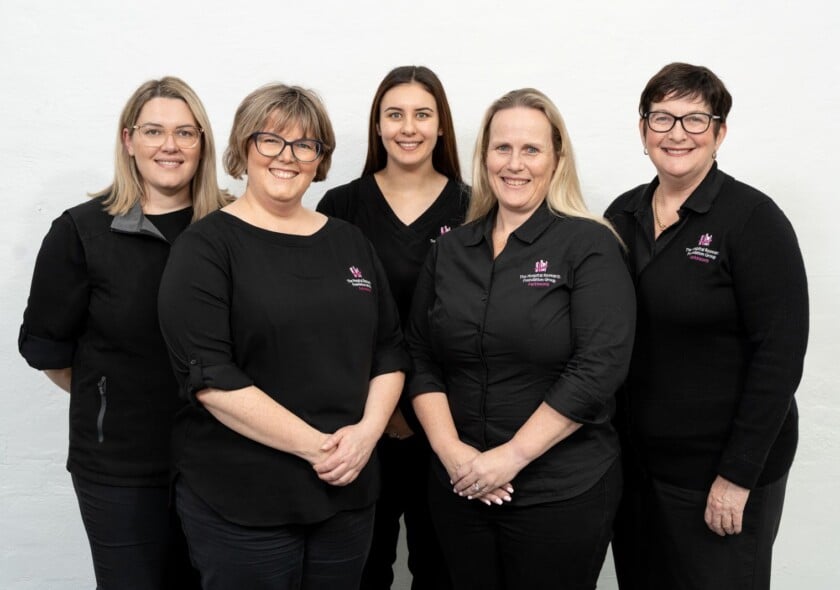
The new co-funding agreement secures the continued delivery of critical services by six highly skilled nurses employed by THRFG.
Formed in 2022 as a partnership between THRFG and the Malinauskas government, the service has provided more than 2,500 clients with access to specialised care – with about 30 percent living in regional South Australia.
THRFG’s chief executive officer, Professor Paul Flynn, welcomed the renewed commitment.
“Parkinson’s is the fastest growing neurological disorder worldwide, and its prevalence in Australia is set to double in the next 15 years,” he said.
“Our team of Parkinson’s Nurse Specialists have been invaluable in supporting South Australians living with Parkinson’s and their families.
“This commitment will ensure that people living with Parkinson’s across the state can continue to access specialised one-on-one care, free of charge.”
These nurses deliver their services within the community, meeting clients at their homes, aged care facilities or hospital beds to provide valuable information, advice and education, coordinate medical appointments, and assess client and carer needs with empathy and understanding.
Regional patients across South Australia are also supported by the service, receiving expert face-to-face care from specialist nurses who travel to locations including Mount Gambier, Kangaroo Island, Port Lincoln and the Riverland.
The Parkinson’s Nurse Specialists Service provides numerous benefits to people with neurological conditions and the health system more broadly, including:
- Better understanding and management of symptoms
- Reduced pressure on GPs, neurologists, geriatricians and hospitals.
- Practical navigation of health and support systems.
- Improved mental and social wellbeing.
- Increased client and carer productivity.
Health Minister Chris Picton said the service filled a critical gap for people living with Parkinson’s.
“It was clear when we came to Government that people living with Parkinson’s and other neurological conditions weren’t getting the support they needed,” he said.
“The Malinauskas Government has worked with The Hospital Research Foundation Group to build a dedicated team of specialist nurses who provide personalised care right across South Australia.
“We’re continuing to invest in the Parkinson’s Nurse Specialist Service so that people can get expert health support without needing to leave home.
“Services like these go a long way to helping South Australians access specialist support without needing to visit a GP or hospital.”
With a focus on education about living well with Parkinson’s, the Parkinson’s Nurse Specialists Service works one-on-one with clients to provide valuable guidance around medication management, reducing falls and hospital admissions, and keeping people safely living at home for longer.
An independent evaluation of the service conducted in 2025 by researchers from Adelaide University’s Rosemary Brant AO Research Centre found that for every dollar invested, the service generated a social return of $1.86.