Expanding the use of point-of-care ultrasound (PoCUS) in rural and remote Australia could help reduce stillbirth rates and improve pregnancy outcomes, particularly for Aboriginal and Torres Strait Islander women.
In a recent submission to South Australia’s Select Committee into Stillbirth, researchers from the University of South Australia said that timely access to antenatal ultrasound is critical for detecting complications early in pregnancy and initiating appropriate care.
“Many life-threatening problems in both mother and baby can be recognised on a point-of-care ultrasound,” lead researcher Professor Nayana Parange said.
“Being able to access antenatal care and ultrasound at the first antenatal visit – ideally before 10 weeks’ gestation – can make a critical difference.”
National data shows that Aboriginal babies are significantly more likely to be stillborn compared to non-Aboriginal babies, with many of these outcomes linked to delayed or absent antenatal care.
In remote communities, early pregnancy services are often limited or entirely inaccessible, with some clinics lacking both equipment and trained staff.
The researchers’ Healthy Newborn Project, funded by The Hospital Research Foundation Group, found that many rural clinics lack staff trained in antenatal ultrasound use, even when equipment is available.
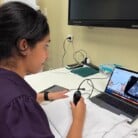
“We’ve seen that with basic training, general practitioners and midwives in rural areas can safely and effectively perform these scans. This builds local capacity and reduces dependence on distant specialists,” Prof Parange said.
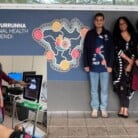
With The Hospital Research Foundation Group’s support, the team has trained 75 rural health professionals across SA and NT, and is piloting a program to train Aboriginal Health Workers to deliver PoCUS directly to their communities.
“By empowering Aboriginal Health Workers with ultrasound skills, we believe we can foster earlier engagement in antenatal care and build trust in the healthcare system,” Prof Parange said.
“This is about culturally responsive care as much as clinical access.”
The team is calling for national investment in PoCUS training programs, including culturally-tailored education materials and a public awareness campaign encouraging early antenatal visits.
“Our research supports the view that PoCUS, when integrated into routine antenatal care, can be a powerful tool to reduce preventable stillbirths. But barriers – training, funding, equipment and trust – must be addressed at every level.”