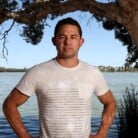
Edith Cowan University based melanoma researcher, Dr Aaron Beasley, has a very personal motivation for pursuing a career in medical research.
As a young man, Aaron’s father was diagnosed with late-stage melanoma and after dabbling in a range of non-medical careers, he decided to devote his professional life to improving outcomes for cancer patients.
It makes his latest research project focused on improving the treatment and survival rates of those facing late-stage melanoma, generously funded by Austal through The Hospital Research Foundation Group, all the more meaningful.
Currently combination immunotherapy is the gold standard melanoma treatment for this cohort however in reality only 50% of patients will respond.
It’s critical, he says, to more accurately predict the non-responders as those patients could then be moved into other more promising clinical trials in an effort to improve their chances of survival.
While melanoma rates have remained relatively stable in Australia recently, the survival rates of those with late-stage melanoma five years on from diagnosis have seen an improvement from under 10% to more than 50% – an improvement Dr Beasley puts down to the use of immune checkpoint inhibitors.
Dr Beasley’s research project is focused on using a blood based liquid biopsy to determine if a person with late-stage melanoma is going to respond to immune checkpoint inhibitors.
“This is important as we know around half of all patients treated will have long term benefits and predicting if someone will respond, will prevent patients from undergoing toxic therapies that are very likely to be unsuccessful,” he said.
“If this is predicted, there may be other treatments or clinical trials that would be much more beneficial.
“Essentially, I am aiming to get the right treatment to the right patient at the right time.”
As a researcher, Dr Beasley says that funding is all researchers’ primary barrier.
“While funding is always an ongoing challenge, we have not had much issue with recruitment for this project,” he said.
“We are always amazed and extremely thankful for the generosity of patients to donate their time, blood, and tissue samples to research, even if this may not benefit them directly, these samples have the potential to help others in the community.”
He said supporting medical research is extremely important as a driver to improve survival rates of those facing cancer and other chronic diseases.
“In general, cancer prognosis/survival has significantly improved from even 10 years ago and this is primarily driven by generous donations, both financial and biological, from the broader community.”
While most of his work is either laboratory or computer based, he said he has had the privilege of meeting many melanoma patients at community events including research discussions and fundraising.
Dr Beasley said the advent of combined immune checkpoint inhibitors has revolutionised the treatment and survival outcomes of melanoma patients.
“However, this treatment does not work for everyone, and many patients would benefit more from different treatments or clinical trials.
“My research aims to prevent patients from undergoing toxic therapies that will likely not work. As more treatments become available, using precision medicine to get the right treatment to the right patient is critically important for improving outcomes,” he added.
In terms of the variability of responses, he said it is largely because cancer is an extremely heterogeneous disease.
“Even if two patients have melanoma, their melanomas are different.
“Immune checkpoint inhibitors block receptors that the melanoma can use to prevent a normal immune response. However, some develop changes that stop the treatment from working.”
He said the ultimate aim is to use a minimally invasive, repeatable, and chronologically flexible test to predict if this treatment will work. If the treatment is predicted to be unsuccessful, then a different treatment strategy may be more beneficial.
Dr Beasley described personalised medicine as the future of cancer treatment.
While he is focused on more effective treatment and survival rates for those with late-stage melanoma, he said prevention and early intervention (while melanoma is contained to the skin) is certainly the best option.
“I believe we will see melanoma become a completely curable disease, and this will involve giving the right patient the right treatment at the right time based on clinically actionable biomarkers.”
Dr Beasley’s research project is generously funded by Austal Ships via The Hospital Research Foundation Group.