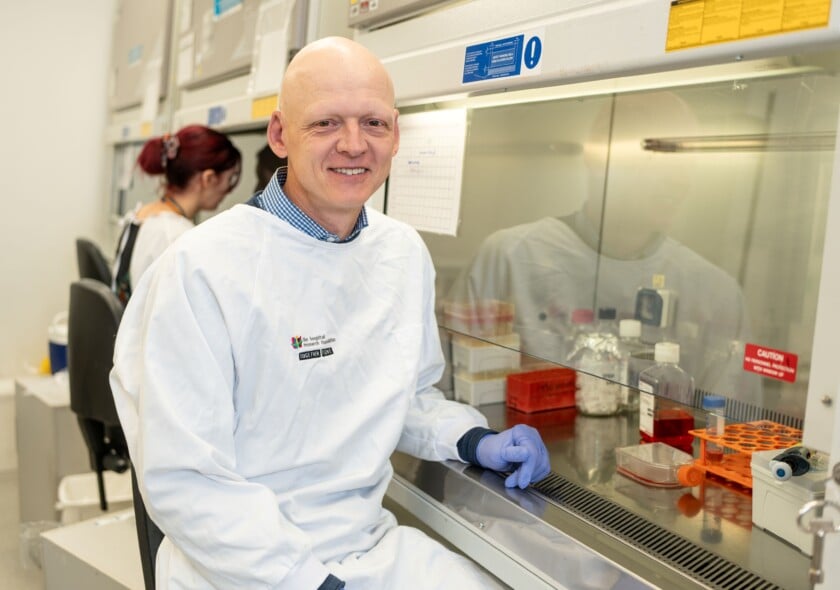
New research is shedding light on how ageing might influence the way multiple myeloma develops – providing a pivotal clue to finding new treatments to inhibit this process.
Dr Krzysztof Mrozik, The Hospital Research Foundation Group’s Multiple Myeloma Fellow based at The University of Adelaide and SAHMRI, has co-led a study that made this exciting breakthrough.
The research, published recently in the premier haematology journal Leukemia, focused on a pre-cancer condition called monoclonal gammopathy of undetermined significance (MGUS).
MGUS is often harmless but can sometimes develop into multiple myeloma, the second most common type of blood cancer. The chances of this happening increase with age – but until now, the reasons why weren’t clear.
The research team has now discovered that as people age, certain cells in the bone marrow – called mesenchymal stromal cells (MSCs) – begin to show signs of ageing, or ‘senescence’.
Dr Mrozik said that bone marrow from older individuals, as well as from patients with MGUS and multiple myeloma, had high numbers of senescent MSCs.
“These aged cells seem to lose their ability to hold myeloma in check and can actually help it grow,” he said.
“One of the key players appears to be a protein called Gremlin1, which is more common in these senescent cells and may encourage cancer cells to multiply.”
In an exciting development, Dr Mrozik said the research showed that young, healthy MSCs could slow down myeloma cells. And when these same cells were artificially aged, the myeloma cells grew faster.
“Understanding how ageing cells contribute to cancer could lead to new ways to prevent or slow its development, especially in older adults,” he said.
“The findings suggest that the natural ageing process in bone marrow may be more than just a background factor – it could actually drive the transformation from MGUS to multiple myeloma.”
These findings open the door to more research to investigate whether targeting aged bone marrow cells could stop multiple myeloma from growing – leading to new ways to prevent or slow the progression of MGUS to multiple myeloma.
Thank you to all The Hospital Research Foundation Group’s donors for supporting this crucial work.