Practical Benefits
Translational research helps us understand how science can better achieve practical benefits and what factors stand in the way of scientific work leading to useful outcomes.


The Hospital Research Foundation Group has been funding translational medical research and healthcare initiatives in South Australia for nearly 60 years.
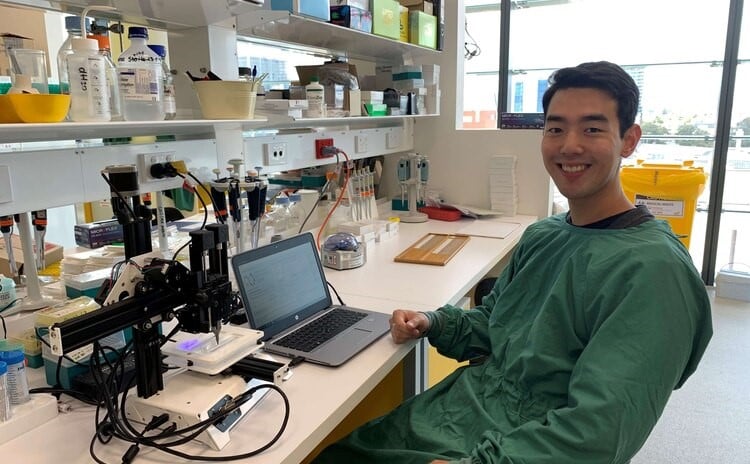
Funding translational research is a focus of The Hospital Research Foundation Group.
We aim to make a life-changing impact on the health of all Australians. This represents a dynamic process, bridging the gap between scientists’ lab discoveries and practical patient care outcomes, ensuring that groundbreaking findings directly translate into tangible patient benefits.
The Hospital Research Foundation Group supports many institutions and facilities, including the Basil Hetzel Institute for Translational Health Research (BHI). This research powerhouse affiliated with The Queen Elizabeth Hospital houses nearly 200 researchers and research administrative staff. Within this dynamic and cutting-edge research environment, the BHI facilitates crucial ‘bench to bedside’ research and offers valuable opportunities for research training.
Translational research is the dynamic process of turning laboratory breakthroughs into tangible patient benefits.
Termed ‘bench-to-bedside,’ translational research is the journey of scientific innovation from the laboratory bench, where theories are formulated and breakthroughs occur, to the bedside, where these discoveries directly influence and improve patient care. This approach ensures that the potential of scientific knowledge is unlocked and actively contributes to addressing our community’s diverse healthcare needs.
Translational research institutes serve as the epicenters of collaborative efforts, uniting researchers, healthcare professionals, and industry leaders to accelerate the translation of scientific discoveries into impactful healthcare solutions. These institutes are pivotal in driving innovation, fostering partnerships, and ensuring the seamless integration of research advancements into patient care.
Translational cancer research aims to efficiently translate research findings from the laboratory into clinical practice for a rapid impact on cancer treatment and outcomes. This type of research is crucial in developing new strategies for the prevention, assessment, treatment, and repair of stroke and other forms of neurotrauma.
Translational research is often categorised into two types:
Translational research helps us understand how science can better achieve practical benefits and what factors stand in the way of scientific work leading to useful outcomes.
Translational research is crucial in bridging the gap between scientific discoveries and their practical application in patient care. It ensures that patients directly experience the benefits of research and contributes to the advancement of healthcare.
Translational research brings together researchers, healthcare providers, education and training to improve the health and wellbeing of patients and the populations they serve. It fosters a collaborative environment where practitioners, consumers and health administrators work together with people who specialise in research methods to test innovations rigorously.
Translational research involves novel interventions and contexts rather than repeating previous evaluations of already-proven interventions in similar circumstances. It encourages innovation and the development of new strategies for prevention, diagnosis and treatments of disease.
By donating to The Hospital Research Foundation Group, you are helping us to advance patient outcomes through translational research. Translational research is vital in bridging the gap between scientific discoveries and their practical application in various fields such as cancer, stroke, dementia and heart disease. Ultimately, you are contributing to the advancement of healthcare and helping to bring about real-world changes that can improve patient outcomes and population health.


